
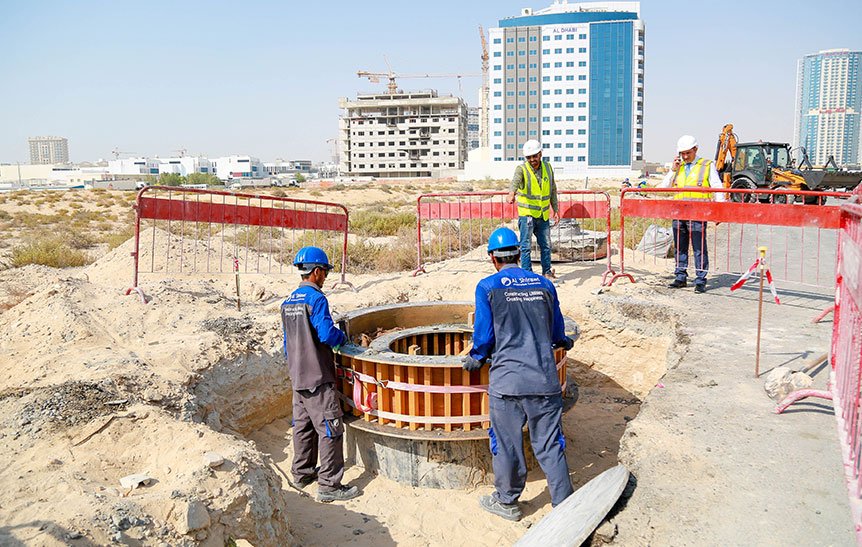
Water infrastructure projects require coordination across engineering, materials, installation, testing and commissioning. HELICS ENGINEERING approaches these requirements as connected stages of a complete delivery lifecycle.
Engineering and technical planning
The project begins with understanding the network requirement, site conditions, interfaces and technical scope. Engineering coordination helps establish a practical basis for procurement, fabrication, installation and subsequent testing.
Pipeline installation and modification
HELICS capabilities include water transmission and distribution networks, internal water infrastructure, potable and recycled water networks, HDPE, DI, GRP/GRE and steel pipelines, pipe laying, fusion welding, connections, relocations and modification works.
Testing and commissioning
Pressure surveys, testing, commissioning and technical verification form an important part of the delivery process. The objective is to ensure that completed systems are prepared for operation and supported by the required technical documentation and approvals.
Maintenance and responsive support
Infrastructure requirements continue after installation. Leak detection and repair, meter maintenance, emergency pipeline response and technical support can help maintain system performance over the operating lifecycle.